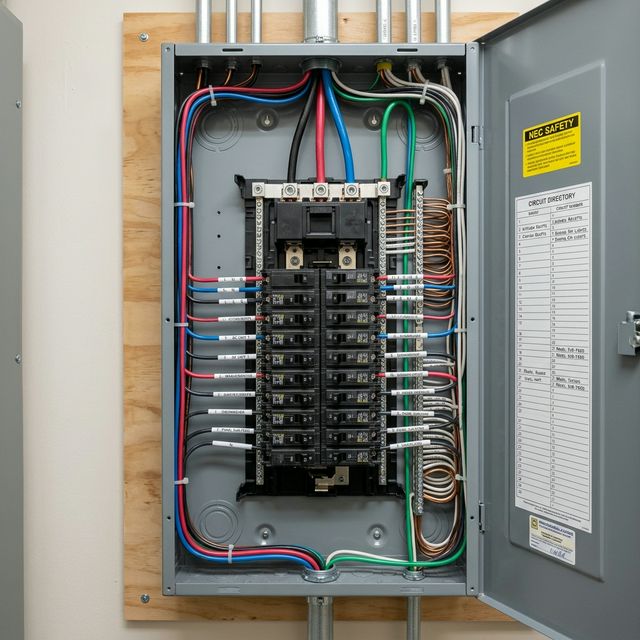
Your electrical panel is the heart of your home's power system. When it's the right size and in good shape, you never think about it. When it's not, everything downstream — your EV charger, your ADU, your kitchen remodel, your heat pump — becomes either impossible or dangerous.
I'm a licensed C-10 electrical contractor in Los Angeles County, and panel upgrades are some of the most consequential work we do. This guide walks you through when a panel upgrade is necessary, what it genuinely costs in LA in 2026, and what the process looks like start to finish.
When Does a Los Angeles Home Actually Need a Panel Upgrade?
Not every home needs a panel upgrade, but a lot of LA's housing stock does. Here are the real triggers:
You're adding an ADU. A full accessory dwelling unit adds roughly 60–100 amps of demand to your property. Most 100-amp panels — common in homes built before 1980 — simply can't absorb this. Even a 200-amp panel that's already loaded will need evaluation.
You're installing an EV charger. A Level 2 charger at 40–48 amps represents a massive continuous load. If your panel is a 100-amp service or your 200-amp panel is already near capacity, the charger can't be safely added without an upgrade.
You're going solar. A grid-tied solar system with battery backup requires a properly sized panel and often a main breaker upgrade. LA has thousands of homes that want solar but have panels that can't support it.
Your panel is a known fire hazard brand. Federal Pacific Electric (FPE) Stab-Lok panels and Zinsco/Sylvania panels are prevalent in LA's older neighborhoods and have well-documented failure modes. If you have one of these, an upgrade isn't just a capacity question — it's a safety imperative.
You're regularly tripping breakers. If your kitchen, laundry room, or any other circuit trips under normal use, that's a symptom of either an overloaded panel or an undersized circuit. A panel assessment will show which.
You're doing a major remodel. Any significant kitchen, bathroom, or home addition work is an opportunity to right-size the electrical system. It's far cheaper to upgrade the panel during an active remodel than to come back later.
What Does a Panel Upgrade Cost in Los Angeles?
Here's what you'll actually pay in LA County in 2026:
| Scope | Typical Cost in LA |
|---|---|
| 100A → 200A upgrade, single-family, simple | $3,500–$5,500 |
| 200A service upgrade (panel only, LADWP upgrade needed) | $4,500–$6,500 |
| 200A upgrade + LADWP service upgrade (street to meter) | $6,000–$9,000 |
| Sub-panel addition for garage/ADU | $1,800–$3,500 |
| Panel relocation (move panel to new location) | $5,000–$8,000+ |
| Federal Pacific / Zinsco panel replacement | $4,000–$6,500 |
The wide range in costs comes primarily from two variables: whether LADWP needs to upgrade the service entrance (the wiring from the street to your meter), and the physical complexity of the panel location and wiring access.
In parts of the Valley and the older Eastside neighborhoods, LADWP service upgrades are commonly required and add $1,500–$2,500 to the project — but that cost is often partially offset by LADWP's own infrastructure upgrade program.
The Panel Upgrade Process: What Actually Happens
A lot of homeowners are nervous about panel work because it involves a service shutdown. Let me walk you through what the process actually looks like.
Day 1: Assessment and permitting. We assess your current panel, load capacity, and LADWP service entrance. We submit for the electrical permit from your local jurisdiction (LADBS for unincorporated LA County and the City of LA, or your specific city's building department). If LADWP service upgrade is needed, we coordinate that application simultaneously. Permits typically take 1–5 business days for straightforward panel upgrades.
Installation day (typically 1 day). We coordinate with LADWP to disconnect the service entrance. Power to the home is off for roughly 4–6 hours. We remove the old panel, install the new 200-amp panel and breakers, transfer existing circuits, add any new circuits needed, and restore power. For most homes, you have full power back the same afternoon.
Inspection. A city electrical inspector visits to verify the work. This typically happens 1–3 days after installation. We're present for every inspection.
LADWP final connection. If LADWP upgraded their service entrance wiring, they'll complete their connection after the inspection is approved. This is the one step that can add a few days of wait time — LADWP scheduling is outside our control, but we manage the coordination.
Total timeline: typically 1–2 weeks from permit submission to final sign-off.
The Hidden Cost of Not Upgrading
I see homeowners try to avoid panel upgrades to save money, and it almost always costs more in the long run.
You can't get ADU permits. LADBS will not issue a Certificate of Occupancy for an ADU when the main panel can't support the added load. We've seen projects stall for months because the owner delayed addressing the panel.
Your insurance rates — or coverage — are at risk. Insurance companies are increasingly flagging FPE Stab-Lok and Zinsco panels. Some won't insure homes with these panels, or will charge significant surcharges. Getting an upgrade can actually reduce your annual premium.
You're limiting your home's value. In 2026, a home with 100-amp service and no EV-ready infrastructure is less competitive in the LA market. Buyers ask about panel capacity the way they used to ask about roof age.
You're adding safety risk. An overloaded panel that repeatedly trips breakers — or worse, doesn't trip when it should — is a fire risk. This isn't scare tactics. Electrical fires destroy homes across LA County every year, and many of them trace back to overtaxed or failed panels.
Panel Upgrade Pre-Work Checklist
- [x] Current panel brand and amperage noted (check the label inside the panel door)
- [x] Service entrance wiring assessed — LADWP upgrade needed?
- [x] Future load requirements identified: EV charger, ADU, solar, HVAC, hot tub?
- [x] Permit required — yes, always for a panel upgrade in LA
- [x] LADWP notified for service disconnect scheduling
- [x] All work by C-10 licensed contractor — non-negotiable
Why You Need a Licensed C-10 for This Work
Let me be direct: panel work is not a DIY project, and it's not something you want done by someone with an unlicensed handyman practice. The stakes are too high.
In California, work on a home's main electrical service requires a C-10 Electrical Contractor license. This license requires thousands of hours of verified field experience, a written exam, and ongoing continuing education requirements. When you hire a C-10 contractor, you're hiring someone who has proven competency in exactly this type of work.
Beyond the license, the job requires a permit — and permits are pulled by the licensed contractor, not the homeowner (for work this significant). The permit creates a paper trail that protects you: proof that the work was done correctly and inspected by the city.
At SkillSee, our C-10 license covers everything from the service entrance to the outlets. We don't subcontract our electrical work — we own it, we pull the permits, and we're accountable for the result.
Combining Panel Upgrades With Other Projects
The most cost-effective time to upgrade your panel is when you're already doing other electrical work. If you're remodeling the kitchen, adding an ADU, or installing solar + EV charging simultaneously, we can combine these projects into a single permit and single mobilization — which reduces overhead and often saves $1,000–$2,500 compared to doing them separately.
If you're planning multiple electrical improvements in the next 2–3 years, it's worth talking to us about sequencing them intelligently.
Contact SkillSee for a free panel assessment. We'll look at your current setup, talk through your goals, and tell you exactly what you need — and what you don't.